*To comply with NDA, I have omitted the company name and intentionally used pseudo-context and placeholder text.


This was an exploratory business-facing project at a growing consumer fintech company. I led all the designs for this new product line.
My role
Lead product designer
What I did
UX research, strategy, UX design, design system, roadmapping & QA
Collaboration
2 PMs
4 engineers
Project time
3 months
2024


Actively used by advisory teams
Task time saved
(60min/task reduced to 15min)
Assets managed through the product since launching
Filed for innovative features
When I was tasked to design the entire product, I recognized the need for a deeper understanding of advisors' workflows on a more granular level to drive meaningful design and adoption. To de-risk the key flows, I leveraged research to gain a better understanding while starting on low-risk screens to move the project forward.
Expert interviews x2
Understand current task flows
Discover frustrations and goals
Evaluate existing team hypotheses
Sales meetings x2
Observe reactions to product pitches

"Selling stocks is complicated. I count on my advisor to help me maximize earnings and save time."

"I help my clients decide how to sell their stocks and then handle the selling process for them."

"I review the plans, approve them, and handle the regulatory filings."
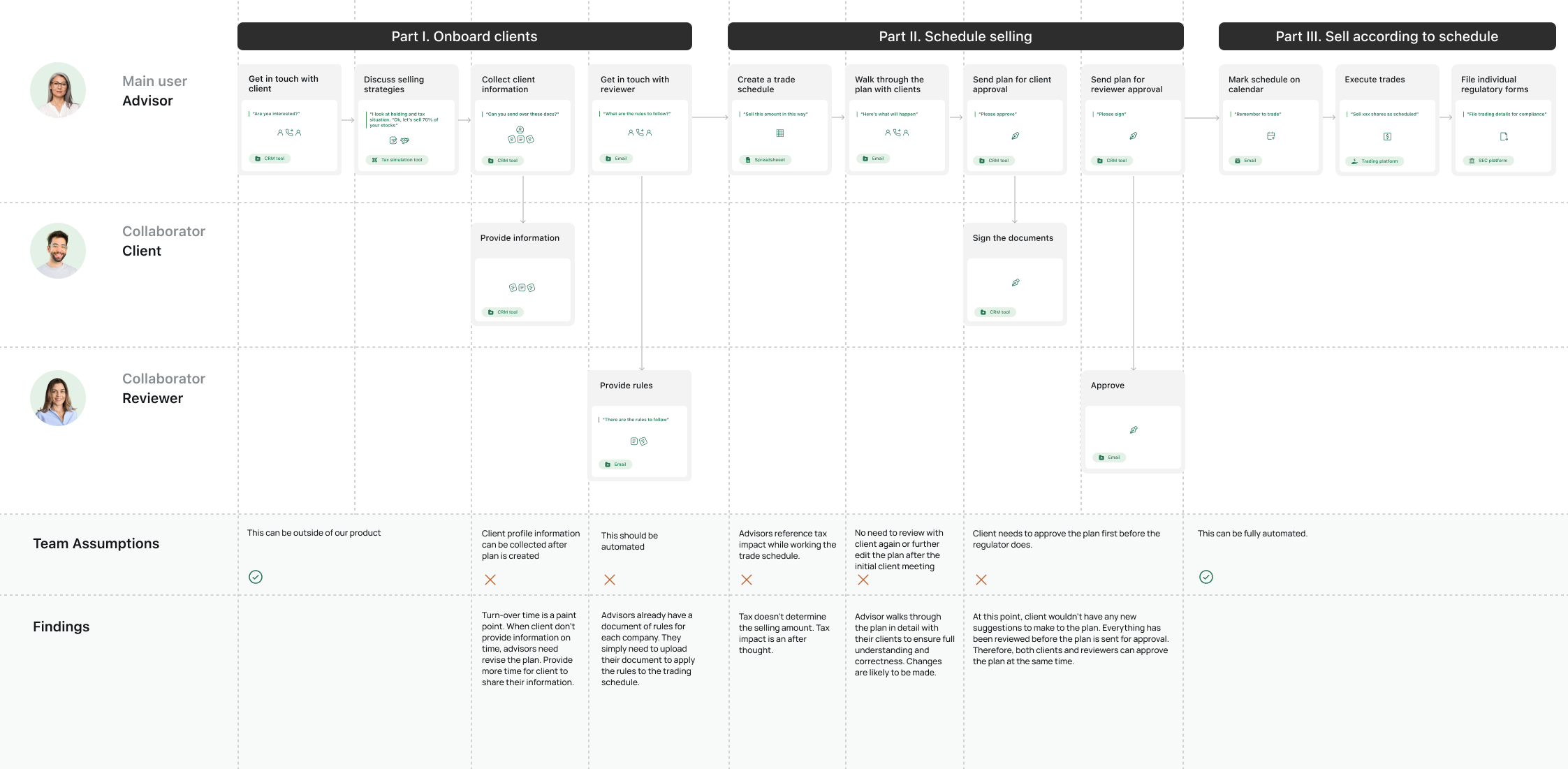
The fragmented journey led to a disjointed user experience. I mapped the advisor's workflow, validating and refining assumptions to align the team's understanding.

Each step can be labor-intensive and time-consuming with repetitive efforts that bottleneck efficiency
Clients seeking more advanced methods were turned away as the existing platform couldn't adequately meet their requirements.
Advisors are motivated by moving fast and hitting a sales target, but above all, they wanted to avoid errors in executing clients' needs while meeting compliance regulations.

For reducing duplicated efforts and easier information access by keeping everything in one place

For providing powerful services, minimizing human errors and saving more time so that advisors can focus on getting more clients.
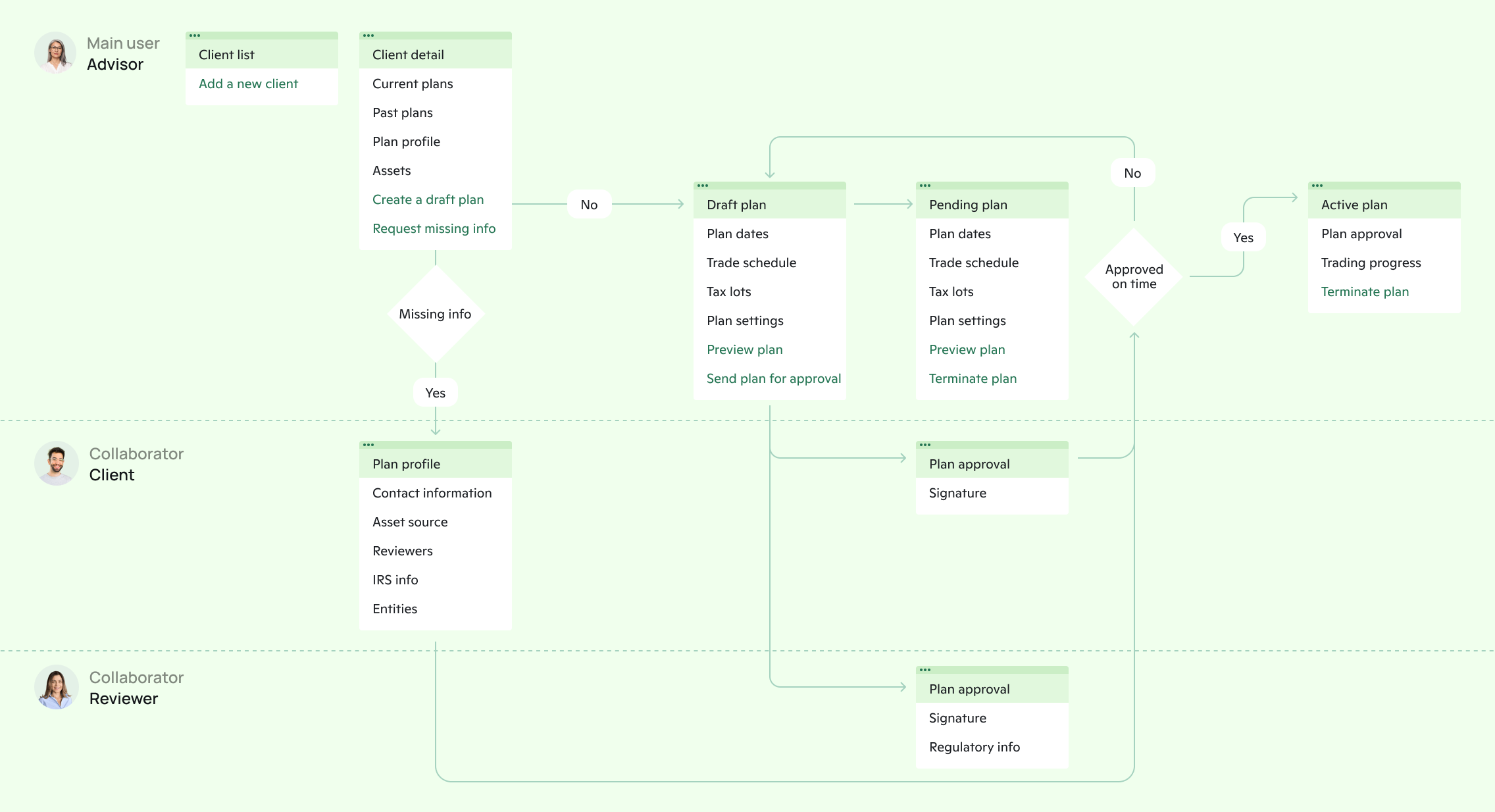
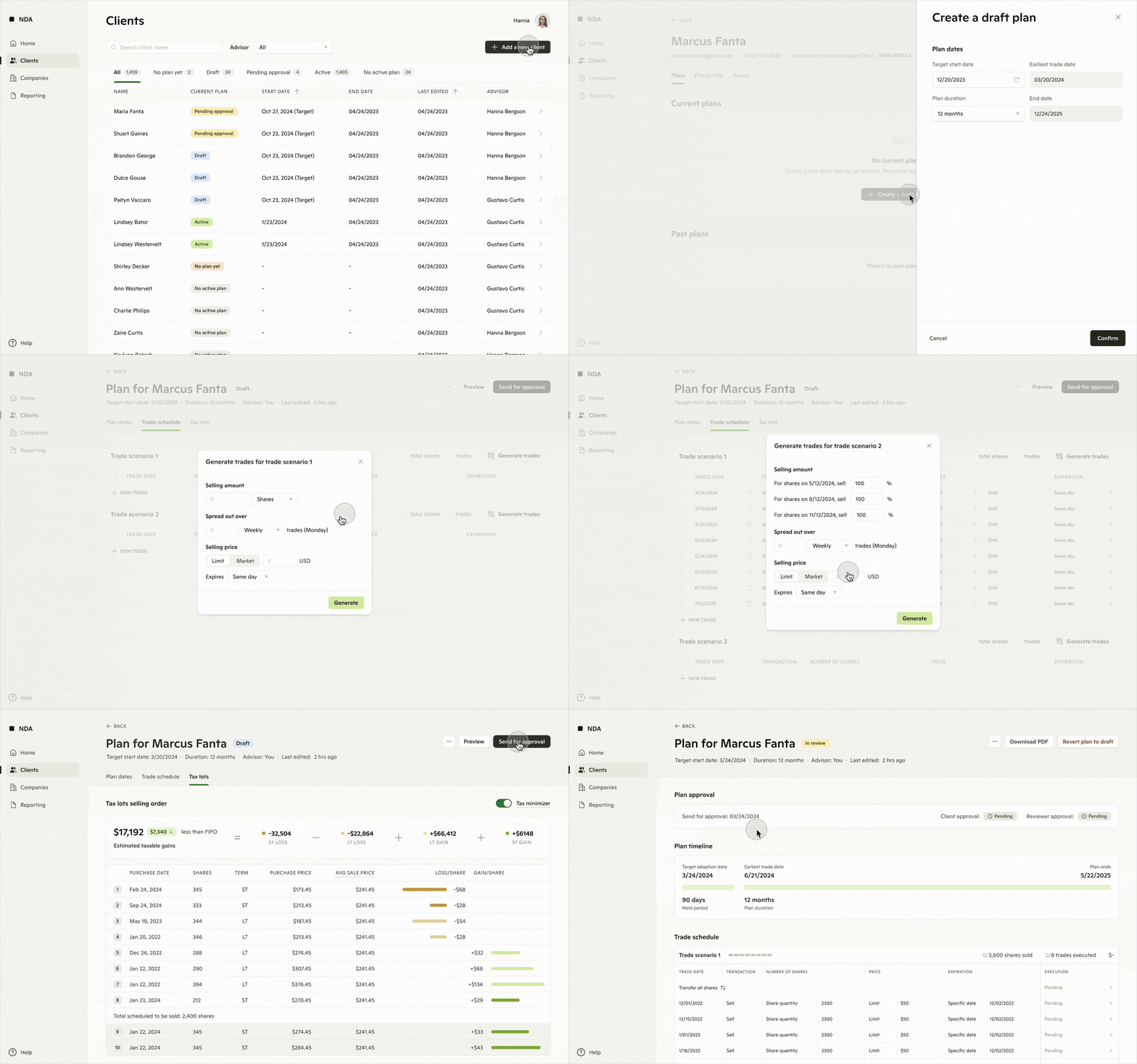
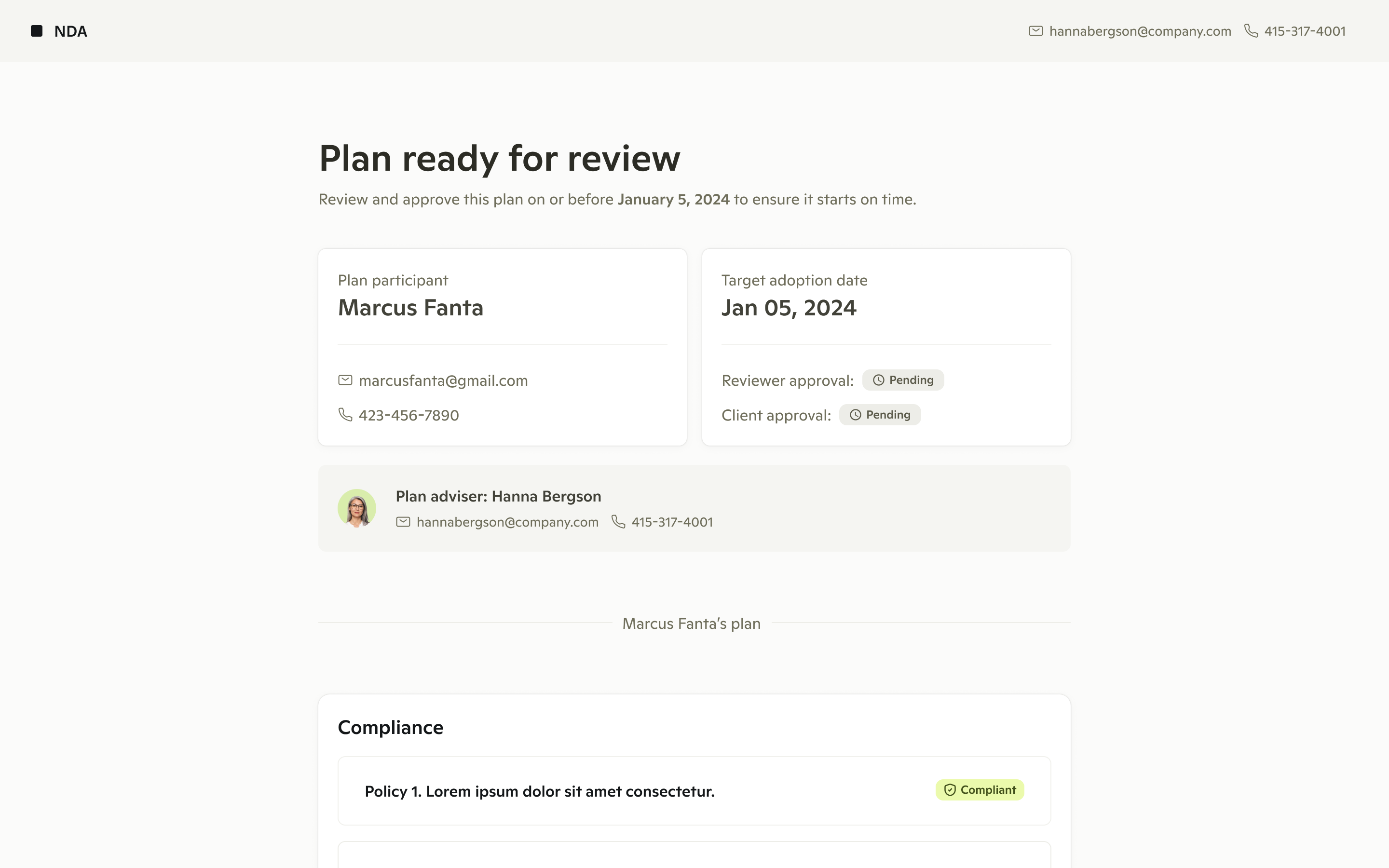
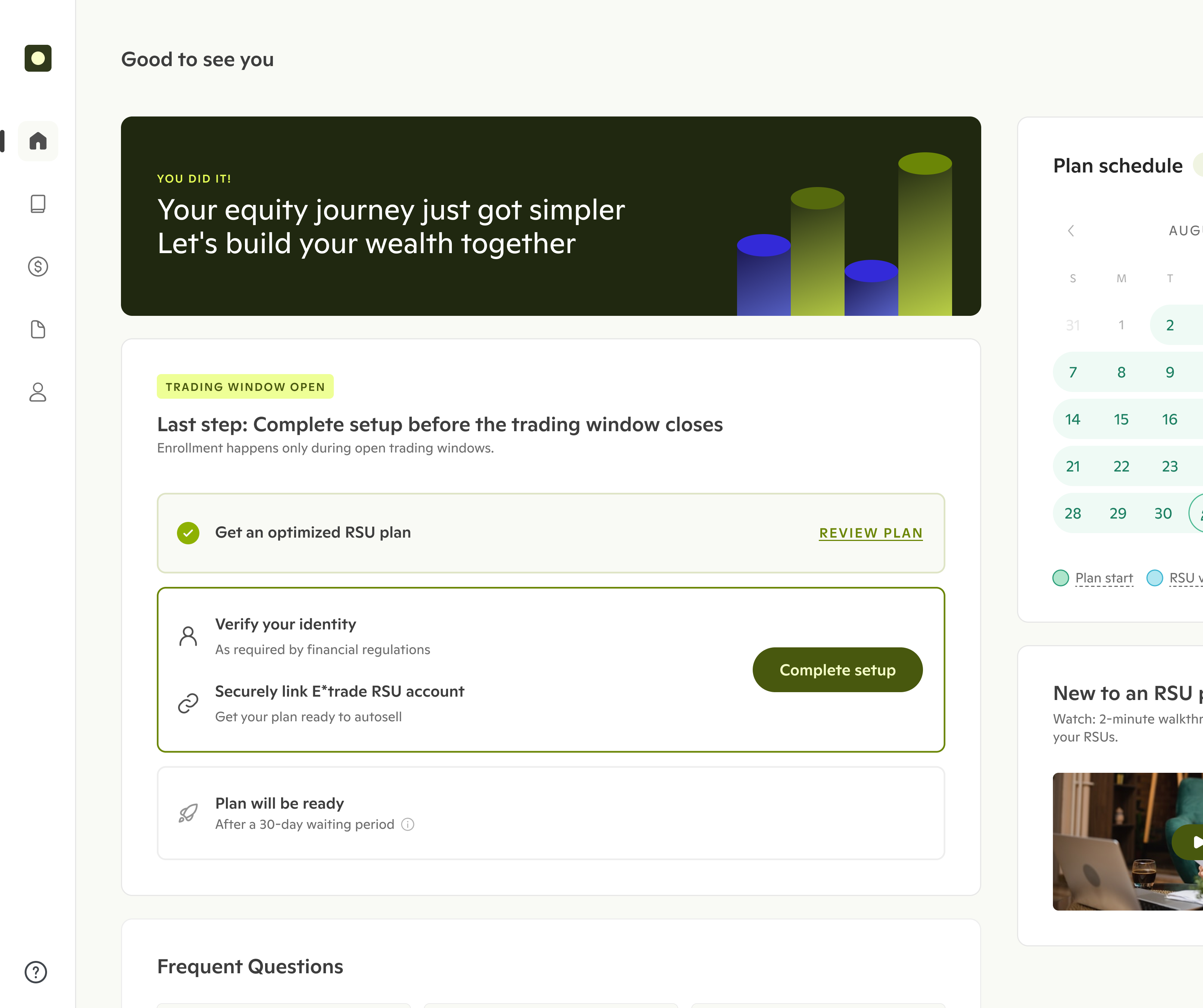
The first major challenge was designing a workflow that supported three distinct users working toward a shared goal: launching the plan by the target date. Each user had tasks to complete across multiple days. To support this, I designed a shared ecosystem that mapped who does what, when, and how data flows between products. This not only streamlined the process but also ensured the products could seamlessly share data, and function as an integrated whole.

I went through multiple design iterations—refining the information architecture, selecting the most suitable UX patterns for each use case, and defining the data shown on each page. While these details are not included in this case study, I’d be happy to walk through my design decisions in a conversation.

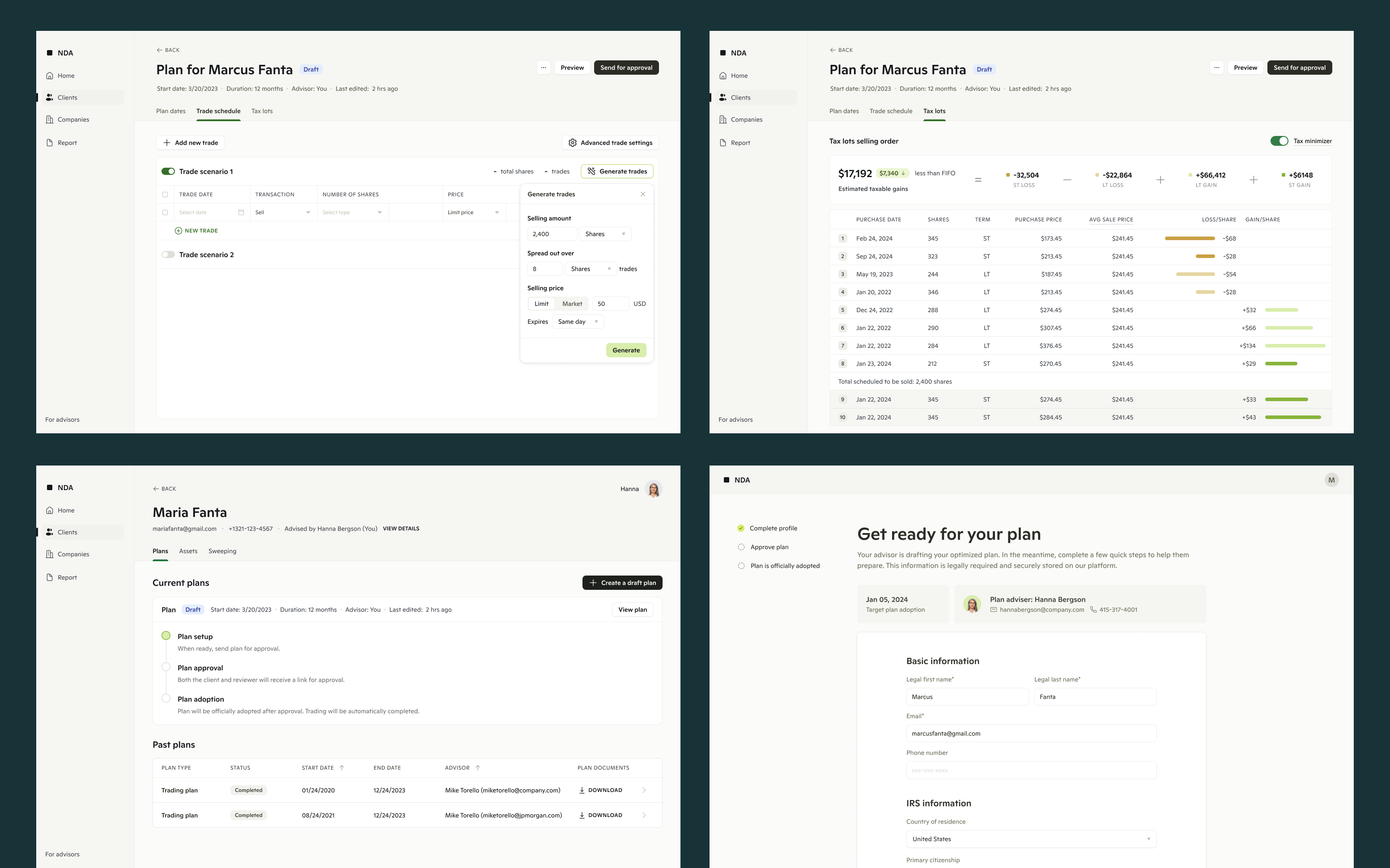
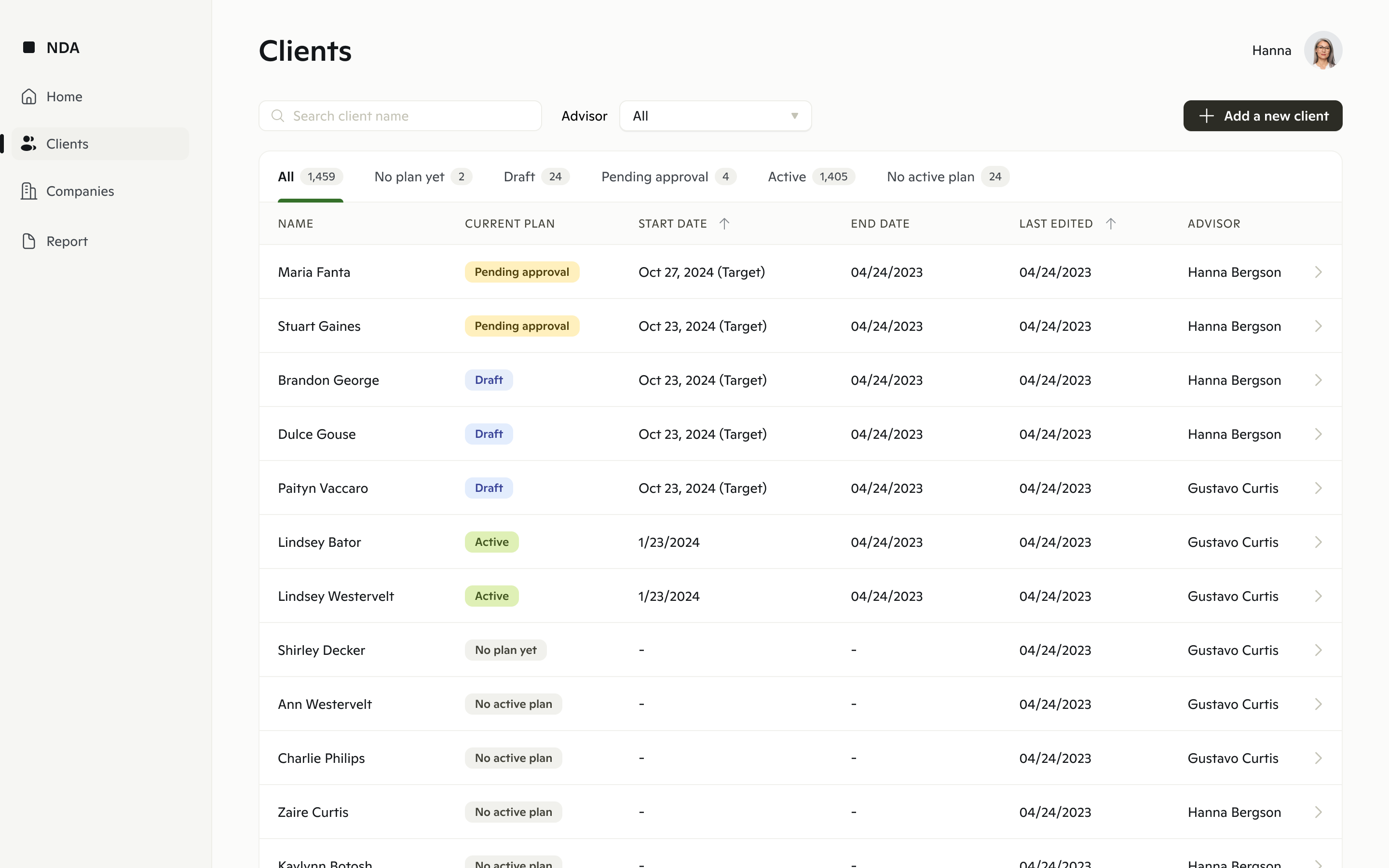
Key screen 1
Client list page

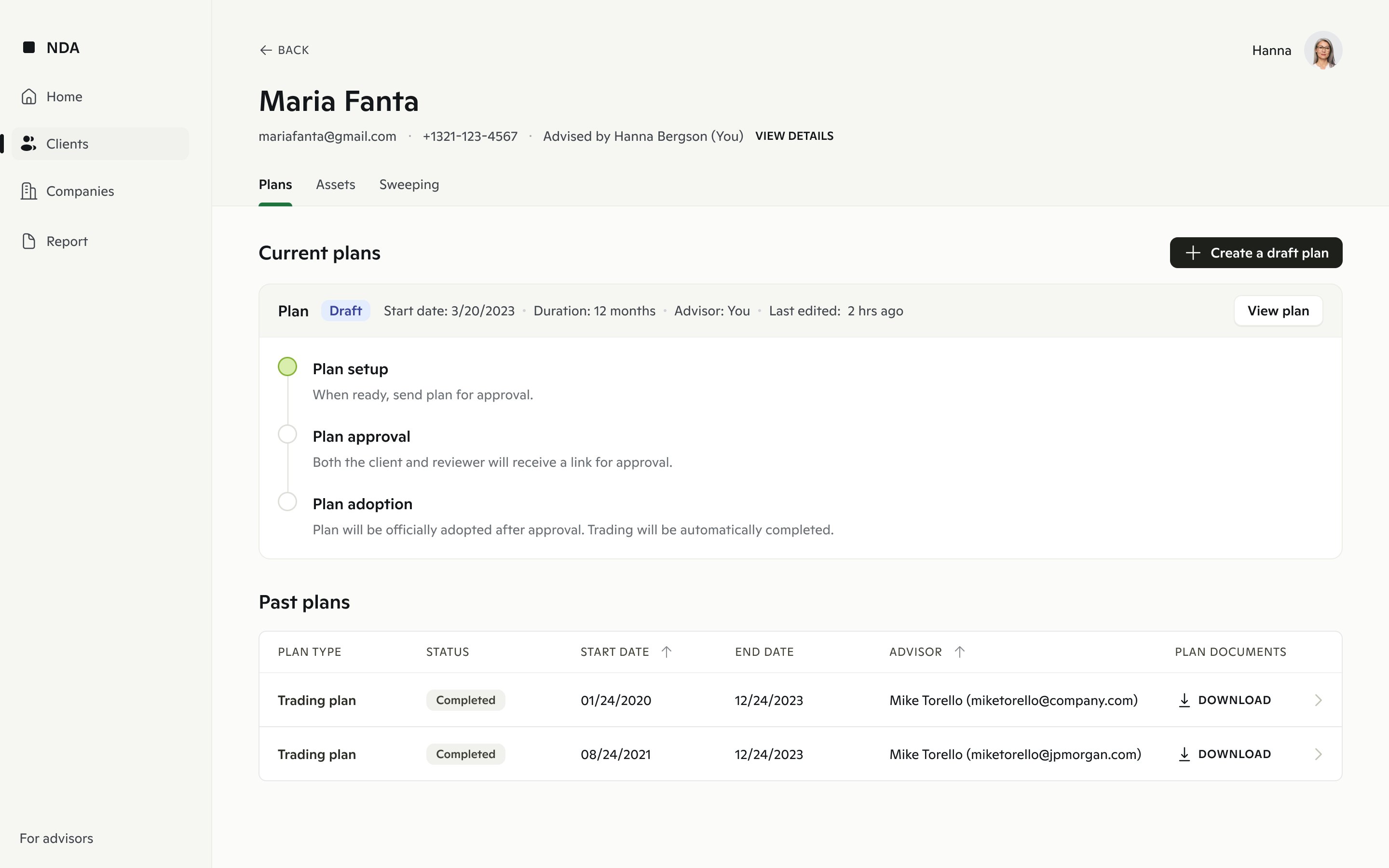
Key screen 2
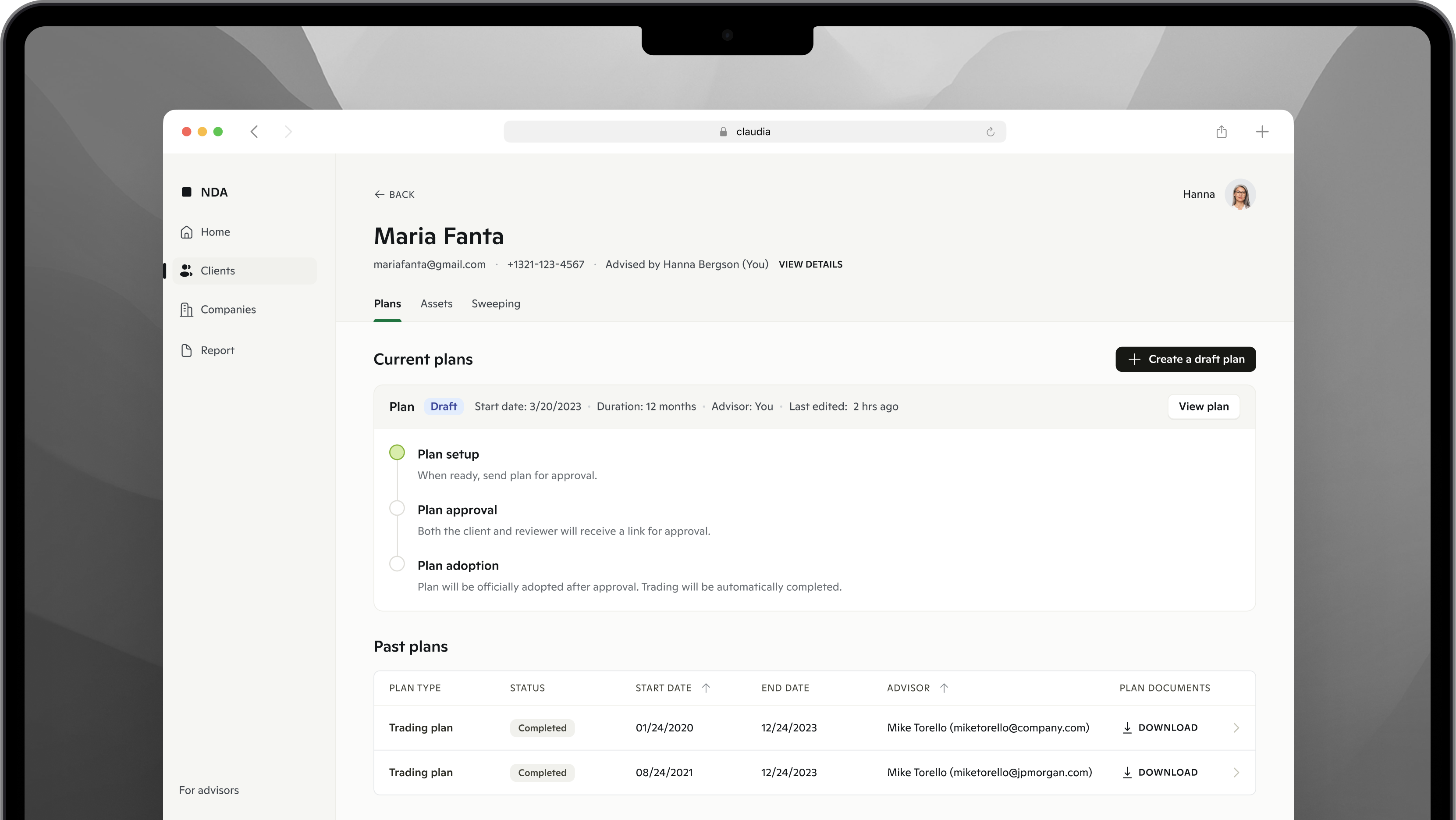
Client detail page

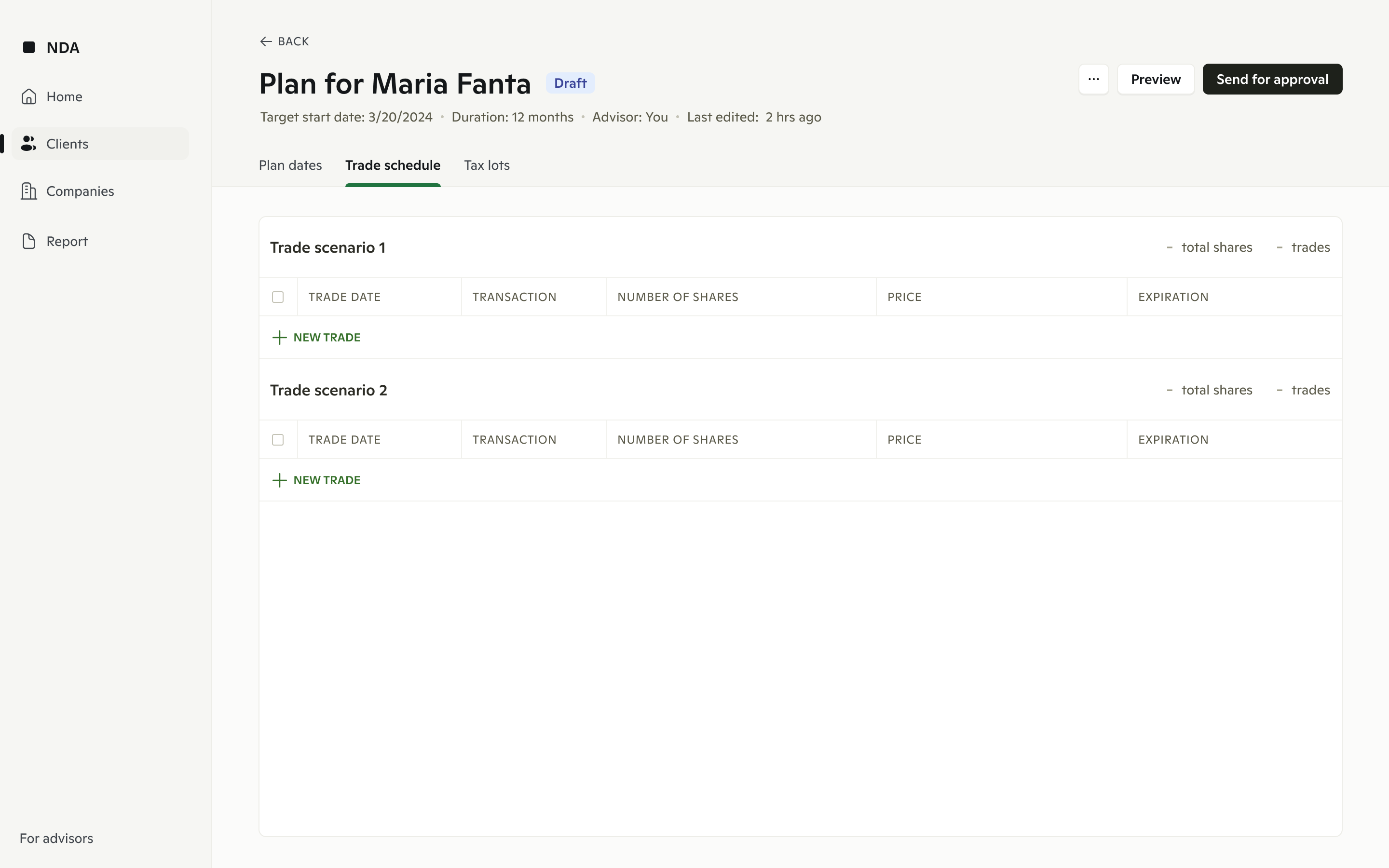
Key screen 3
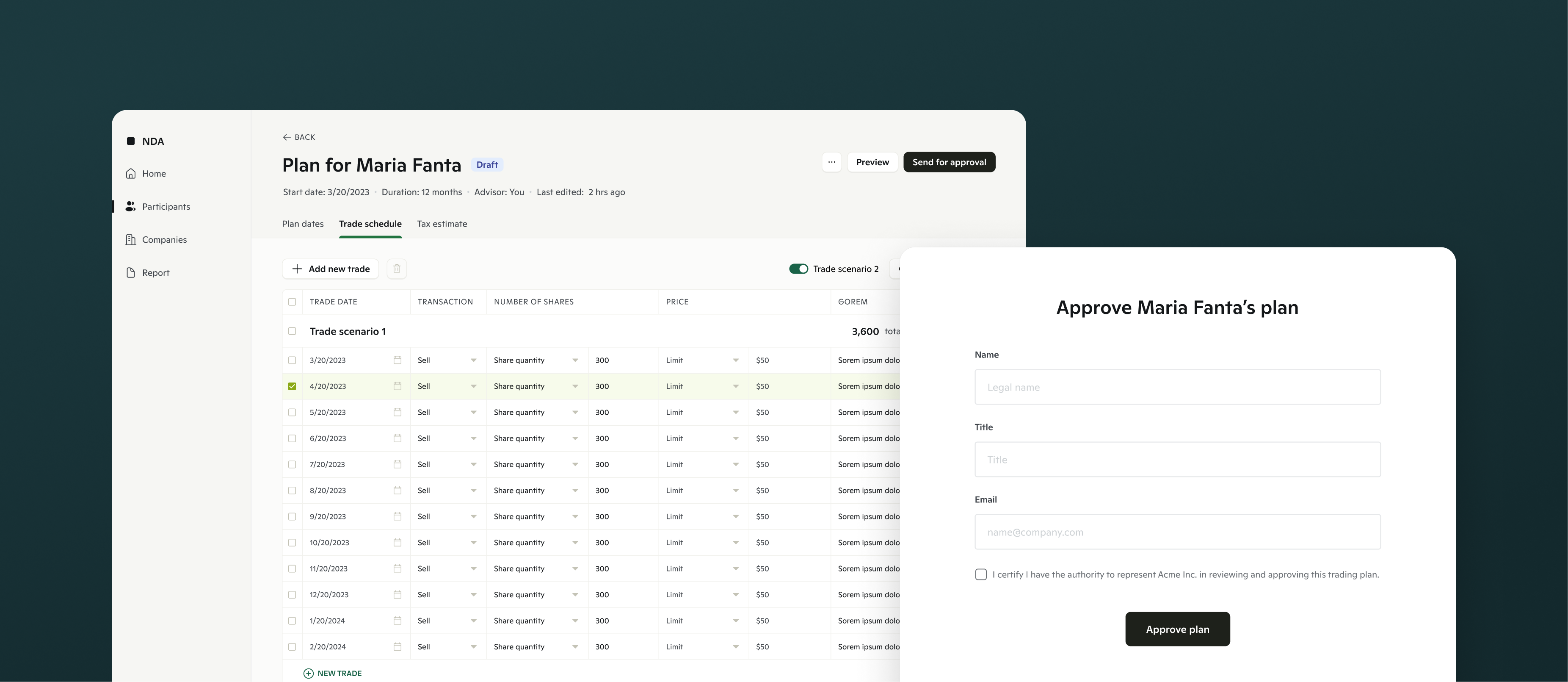
Plan page
Days of
turnaround time
Platforms
Process management
Information access
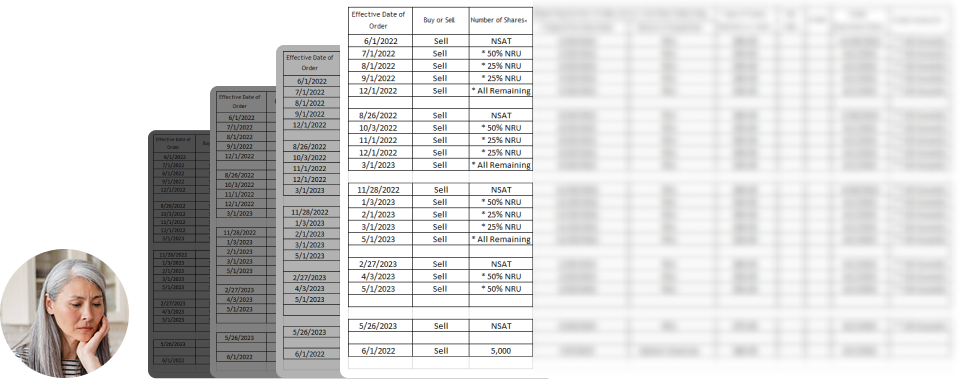
Advisors help clients plan stock sales by manually entering details into spreadsheets. On the right is an example of the original spreadsheet they used (blurred intentionally). Imagine the tedious work of typing line by line and double-checking for accuracy—every single time.

1-year schedule =
inputs/client
400 clients =
inputs
+ Time taken to review each schedule carefully
+ Losing clients by messing up their scheduled trading
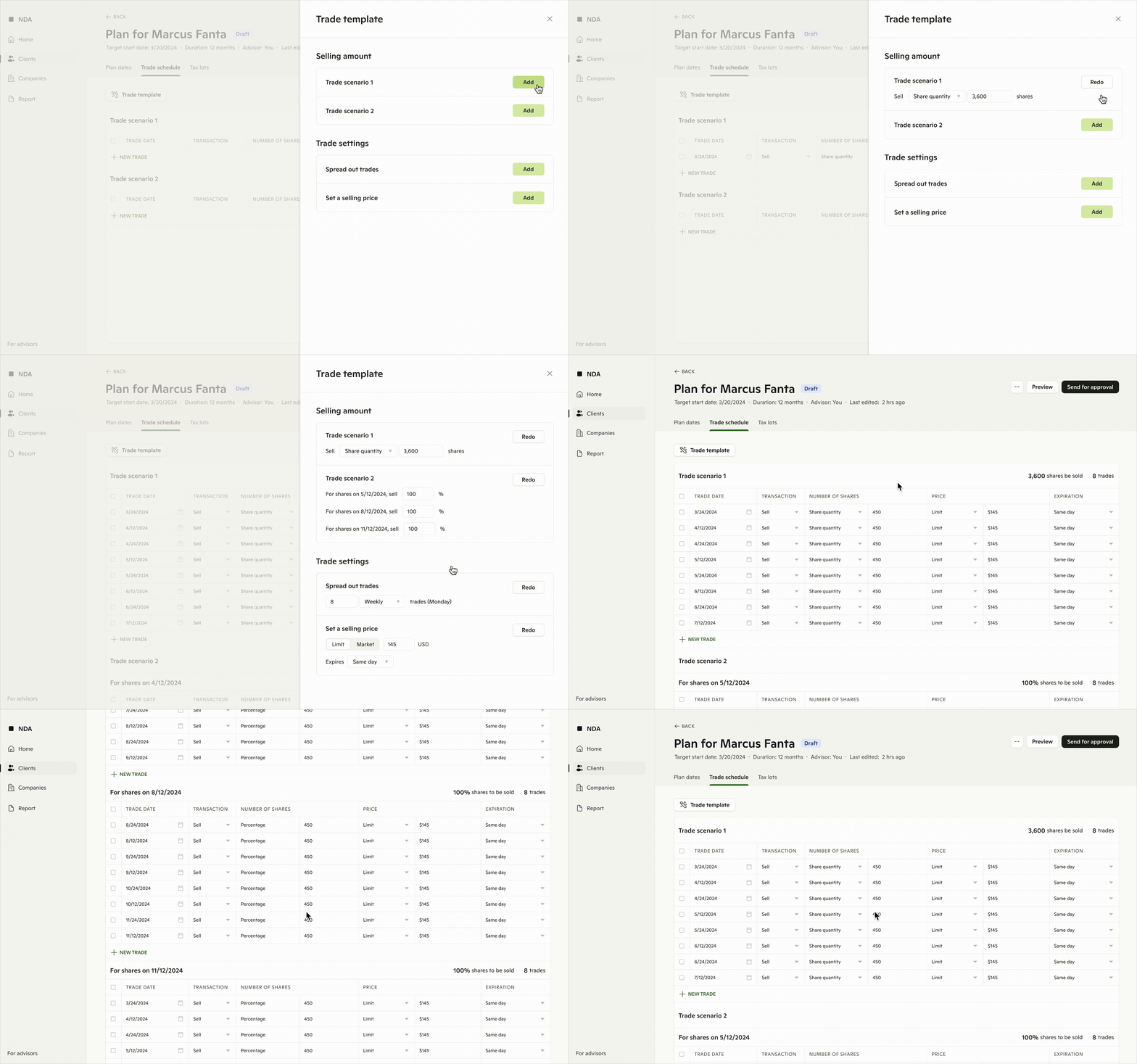
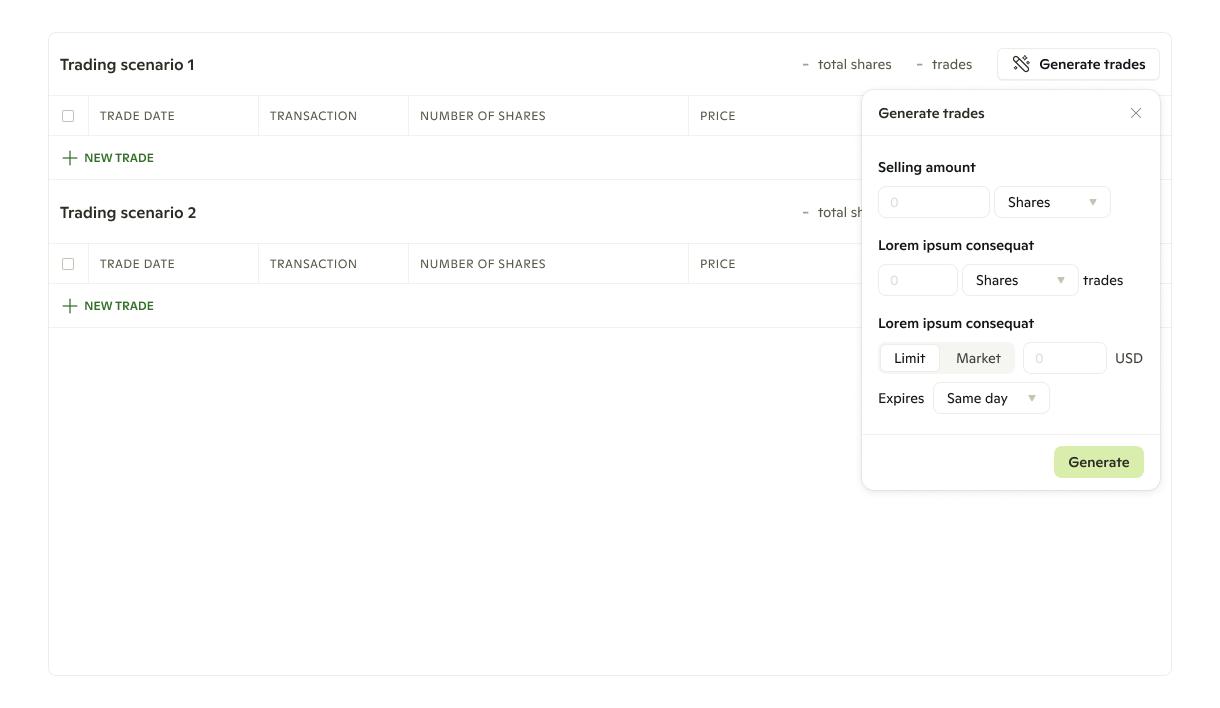
Although advisors noted that they start from scratch for each plan, I saw an opportunity to reduce manual work by generating trades automatically for further customization. After successfully pitching the idea to the team, I collaborated with the PM to define the template details.

Generating trades with a few setting for further customization
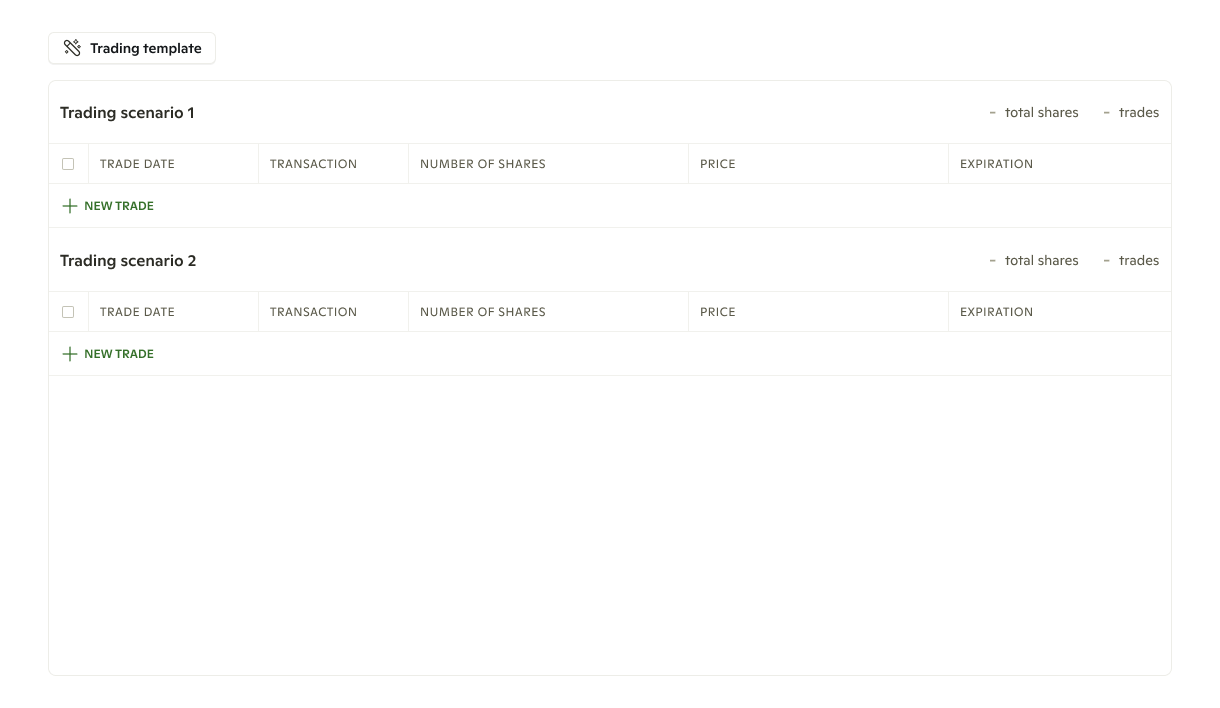
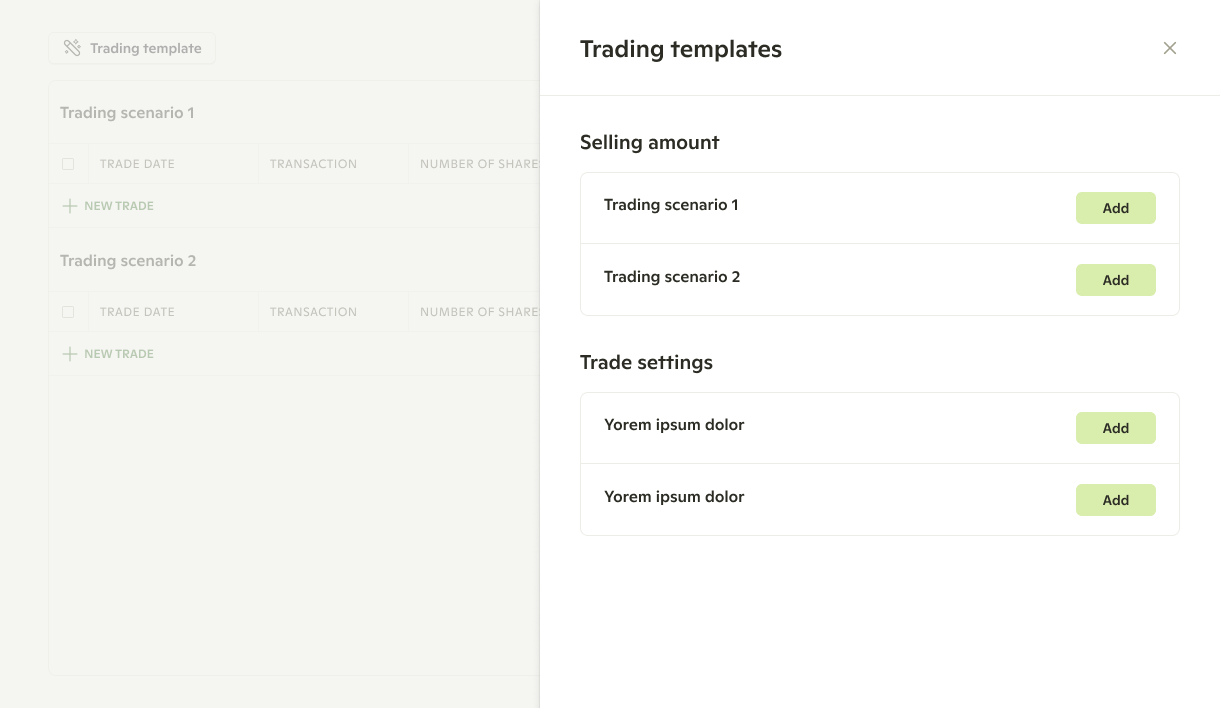
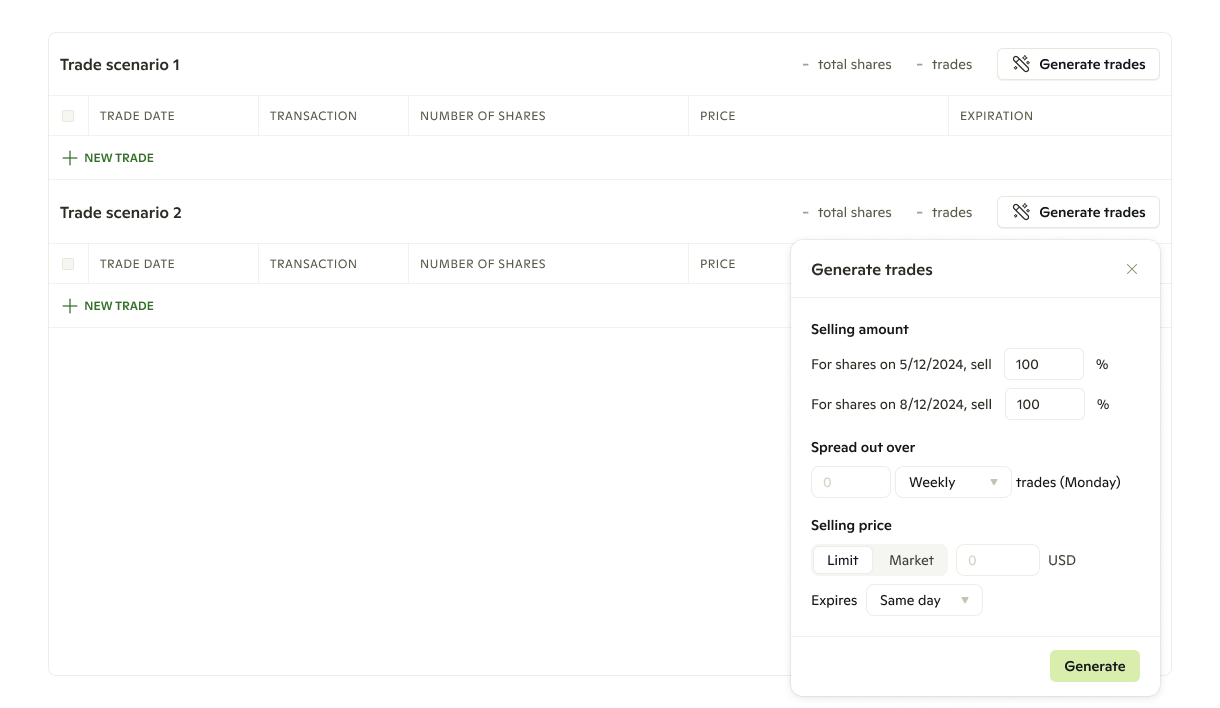
However initial designs, I uncovered a few friction points during testing with advisors. Their feedback helped me see where the design wasn’t quite aligning with how they thought about planning. So I used those insights to tweak the flow, making it more flexible and reducing some unnecessary interactions.


Before
All settings under one trading template
Individual add button for each setting


After
Integrate key settings into the flow
Enter settings at once and then generate the table
min/plan
Human errors so far
Feature adoption
*To comply with NDA, I have intentionally used placeholder text.
This case study provides and overview of the project. Reach out to chat more about the details!


I draft a plan based on client's need and send the draft for approval.

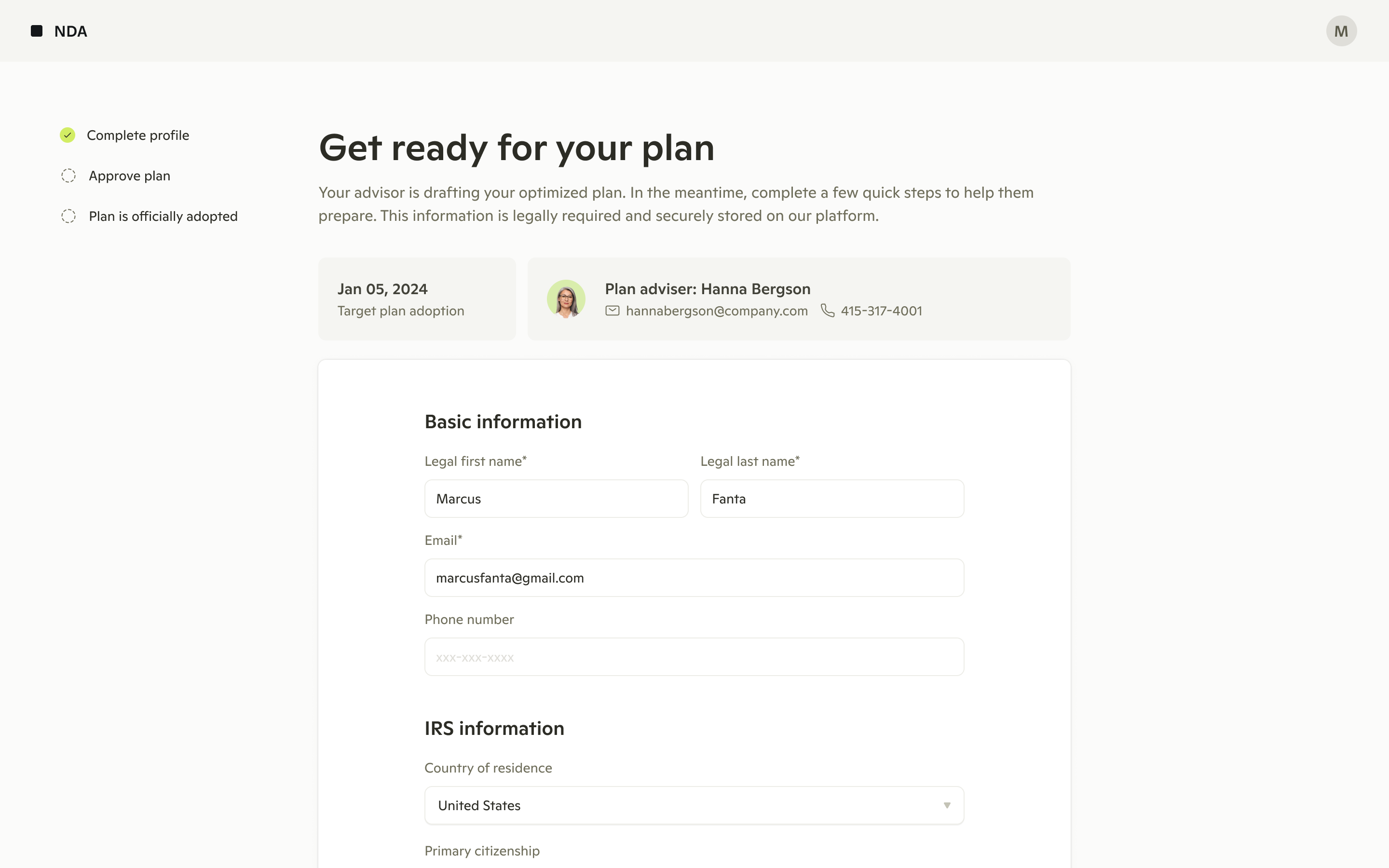
I provide personal information to support my advisor’s draft and approve the plan once it’s ready.


I review the plans and approve them.

Once the plan is approved, I monitor the automated trading.

Task time saved
(60min/task reduced to 15min)
Actively used by advisory teams
Assets managed through the product
Filed for innovative features

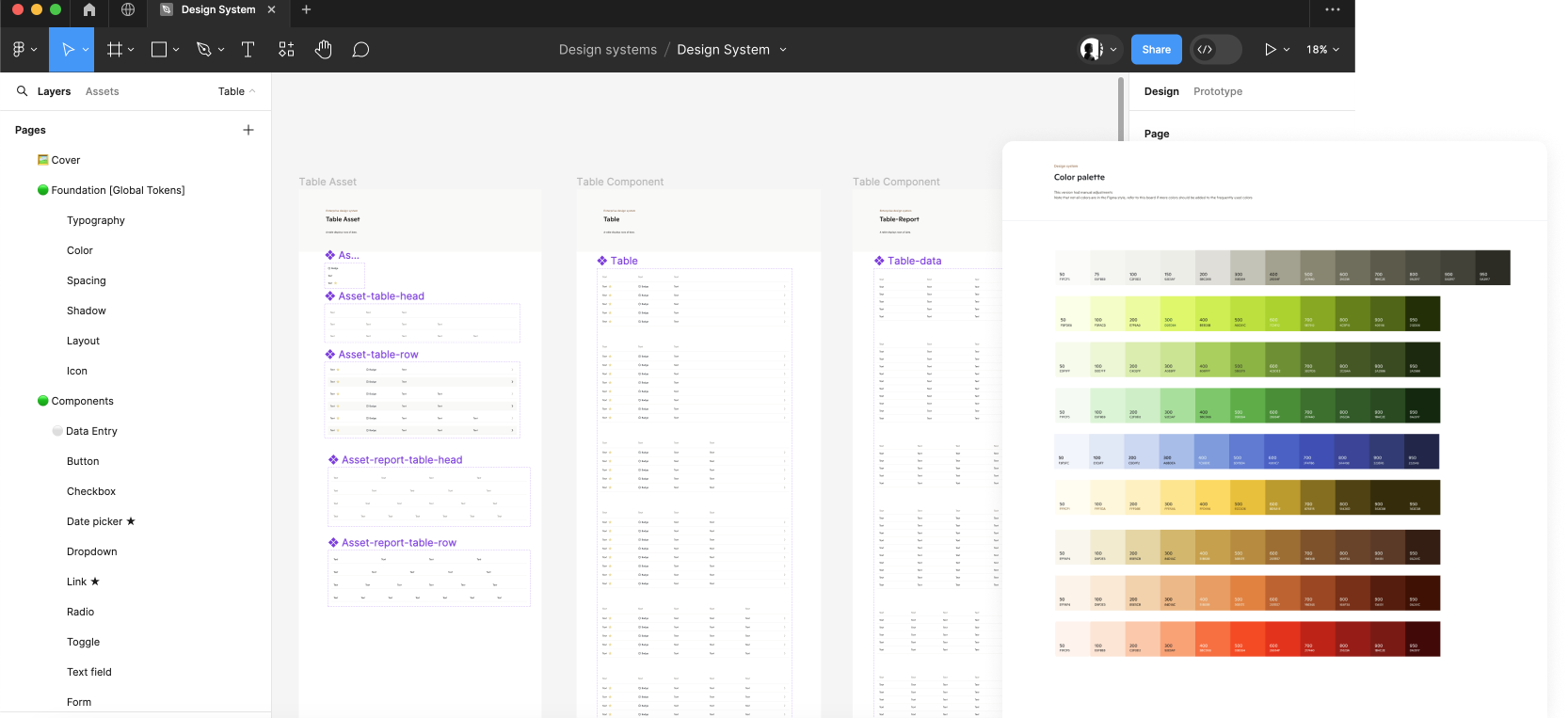
Our existing design system—originally built for consumer products—was disorganized and limiting for business-facing product use. To accelerate design and development for new products, I led a system revamp, starting with foundational elements and gradually expanding it across projects. I grew the color library by 50% and built a component library of 25 components with 300+ variants using an atomic approach. The new system streamlined workflows and reduced time-to-market by 20%.

This was an experimental business-facing project at a growing consumer fintech company. I worked with cross-functional teams to rapidly turn ideas into functional prototypes—sometimes in just days. It was the most challenging to help figure out what to build. Not every idea shipped, but I embraced the path to discovering the next big opportunity, always bringing curiosity, passion, and fun to the process.